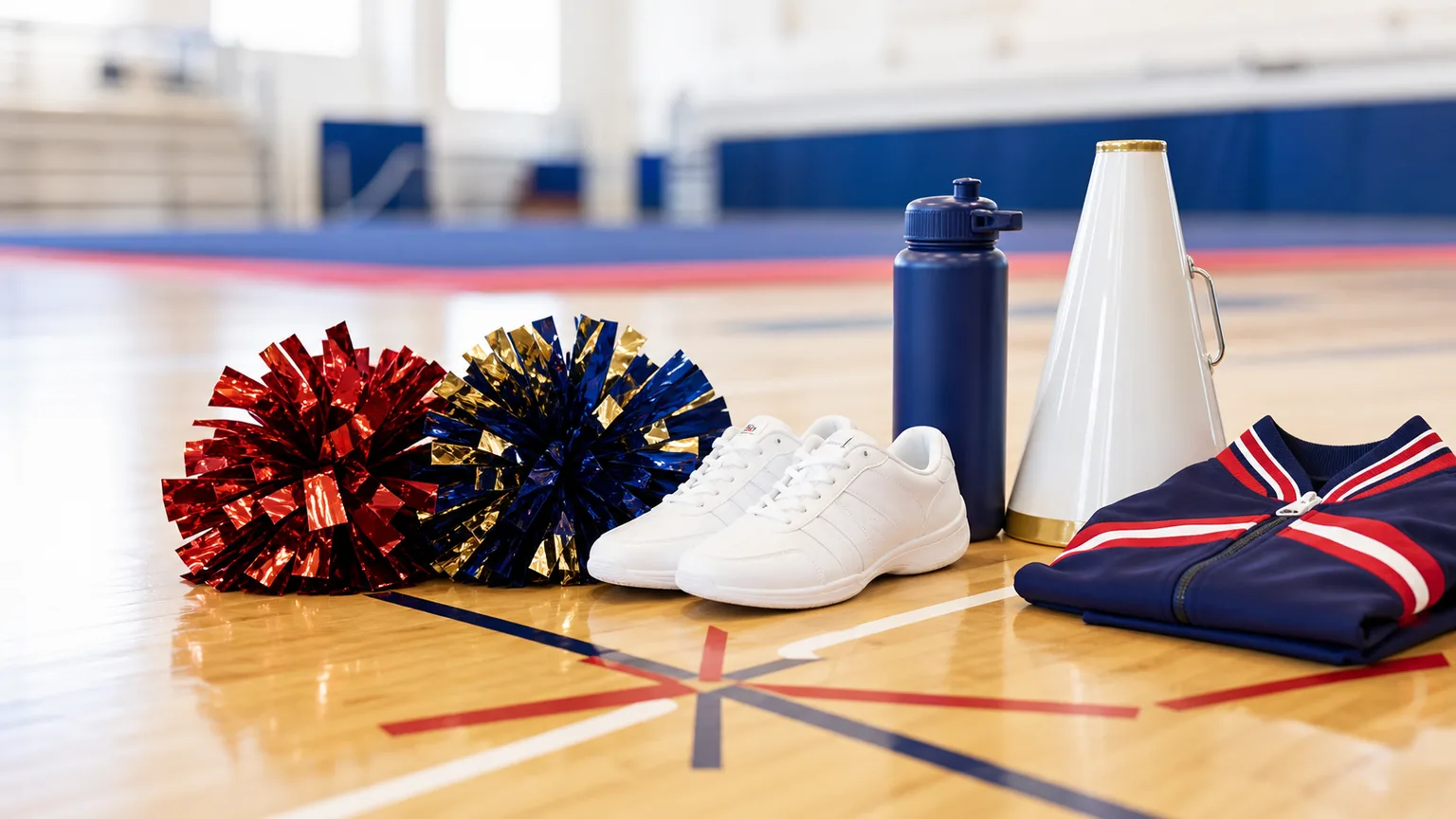
Cheer supports teams and performs routines
Youth cheer can include sideline chants at games, halftime or timeout performances, pep events, and competition routines judged by a rubric.
Some teams are sideline-only, some are competition-focused, and some do both. The common thread is teamwork, timing, sharp motions, safe movement, and positive crowd leadership.
Parent note: Cheer formats
Counts keep the team together
Cheerleaders often learn material in eight-count phrases so motions, chants, jumps, formations, stunts, tumbling passes, and transitions happen together.
Parents will hear coaches count out loud in practice. The exact words, tempo, and music cues can vary by routine, but listening for counts is a core beginner skill.
Parent note: Counts
Motions and chants create clean crowd leadership
Motions are the arm positions and body shapes cheerleaders hit, while chants use words, rhythm, and crowd response to support the team.
Sharp motions, clear voices, spacing, and sportsmanship matter more than volume alone. Sideline cheer often repeats short chants so the crowd can follow.
Parent note: Motions and chants
Jumps, tumbling, and stunts depend on level
Cheer may include jumps, beginner tumbling, lifts, pyramids, or stunts, but youth programs limit skills based on age, training, surface, supervision, and safety rules.
No-stunt teams and beginner tumbling limits are normal. Coaches decide which skills are allowed, spotted, practiced, or left out for a specific team.
Parent note: Skill levels
Competition cheer is judged on a routine
Competition routines combine required elements such as motions, jumps, dance, formations, tumbling, stunts, synchronization, crowd appeal, and overall performance quality.
Rubrics vary by event and division. A team can be strong in spirit and teamwork while still learning the technical parts of a score sheet.
Parent note: Competition basics