Referee Signals explained in plain English for parents learning Wrestling.
Takedown
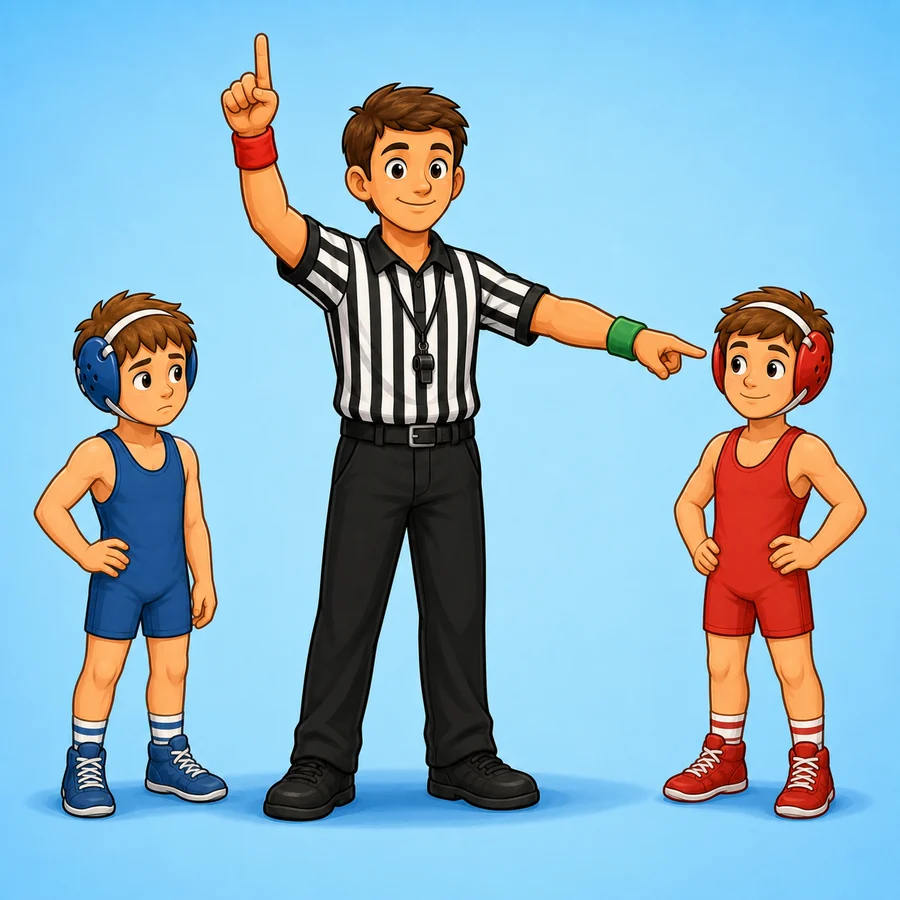
The referee awards points because a wrestler gained control from neutral.
When it happens: After neutral action when control is established under the rules.
What parents should know: A scramble may continue for a moment before points are awarded. Wait for the signal and scoreboard.
Visual cue: Referee raises or extends the scoring-side hand with the takedown point signal and identifies the wrestler's color.
Escape
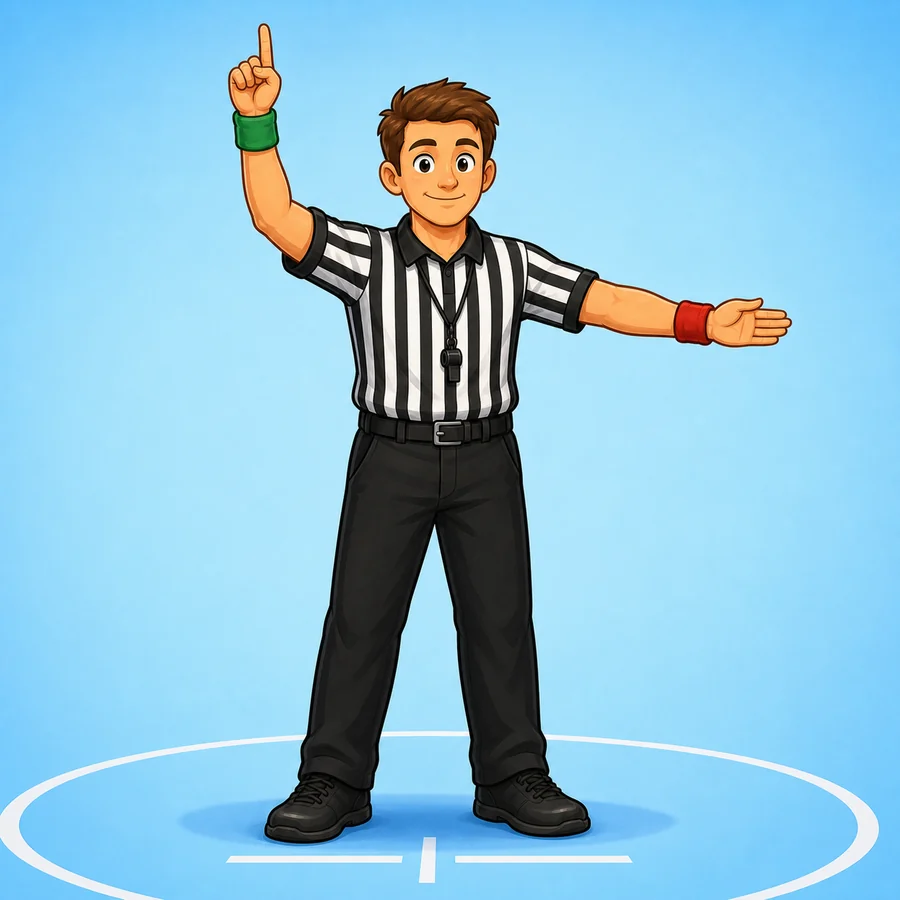
The bottom wrestler got free from control and returned to neutral.
When it happens: When the controlled wrestler separates and control is broken.
What parents should know: An escape is different from a reversal because the wrestlers return to neutral instead of control switching directly.
Visual cue: Referee signals points for the escaping wrestler and usually brings action back to neutral if needed.
Reversal
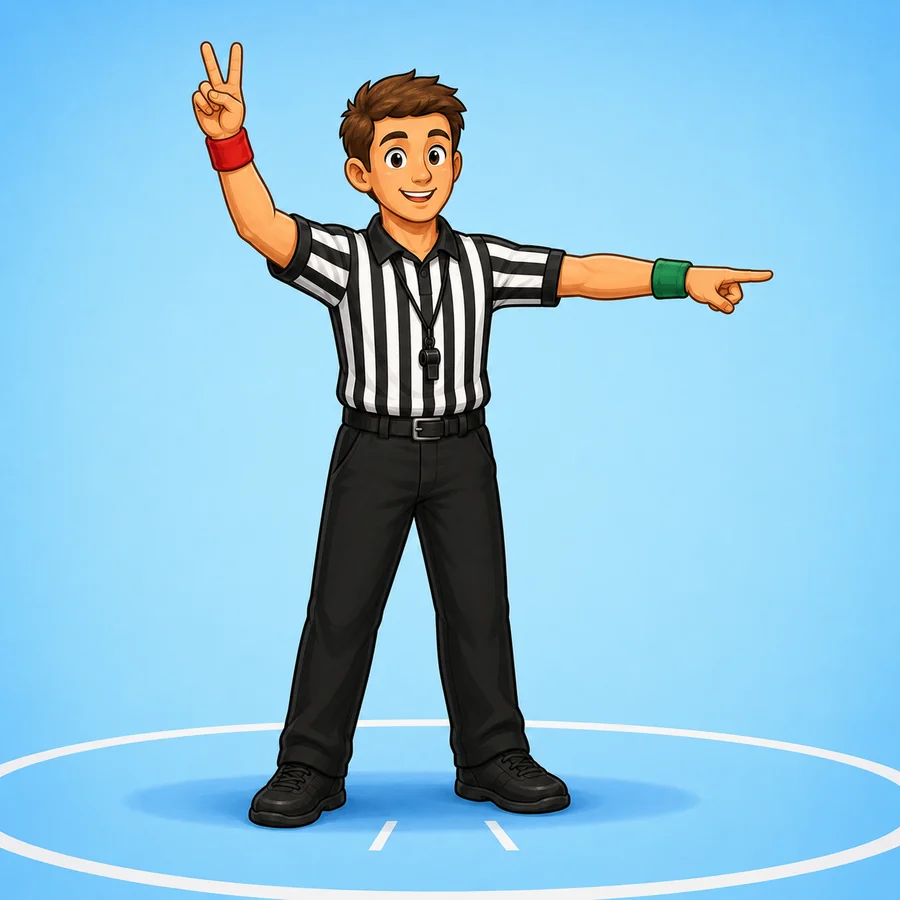
The bottom wrestler gained control and became the top wrestler.
When it happens: During action from bottom when control changes hands.
What parents should know: This can happen fast, so watch for the referee's control signal instead of guessing from who is higher for one second.
Visual cue: Referee signals reversal points toward the wrestler who gained control.
Near Fall
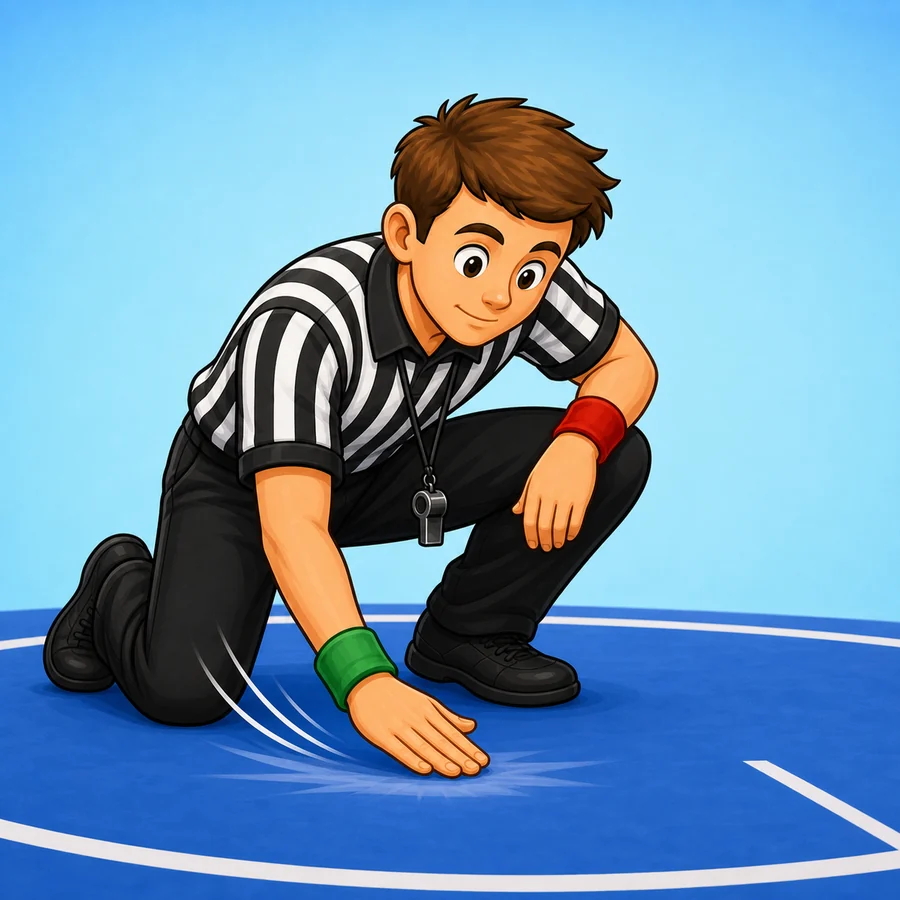
The referee is counting or awarding near-fall points because the opponent's back is close to the mat under the rules.
When it happens: During top control when scoring criteria are met but there is not yet a pin.
What parents should know: The referee may count near fall before posting points. The exact count and point value can vary by rules.
Visual cue: Referee swipes or counts with an arm near the mat, then awards the near-fall points.
Fall Or Pin
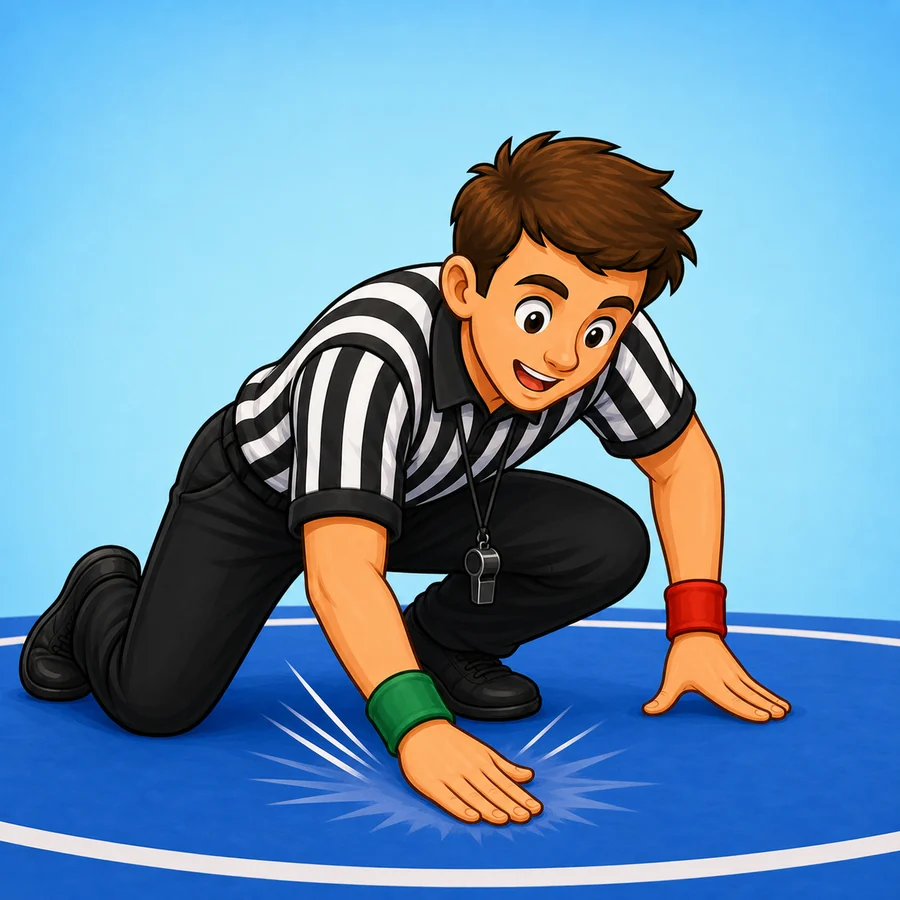
The match is ended by a pin when the referee confirms the required shoulder control.
When it happens: When a wrestler has held the opponent in pinning criteria long enough under the rules.
What parents should know: The match is not over until the referee calls the fall, even if the crowd thinks it is pinned.
Visual cue: Referee slaps the mat or gives the fall signal, then stops the match.
Out Of Bounds
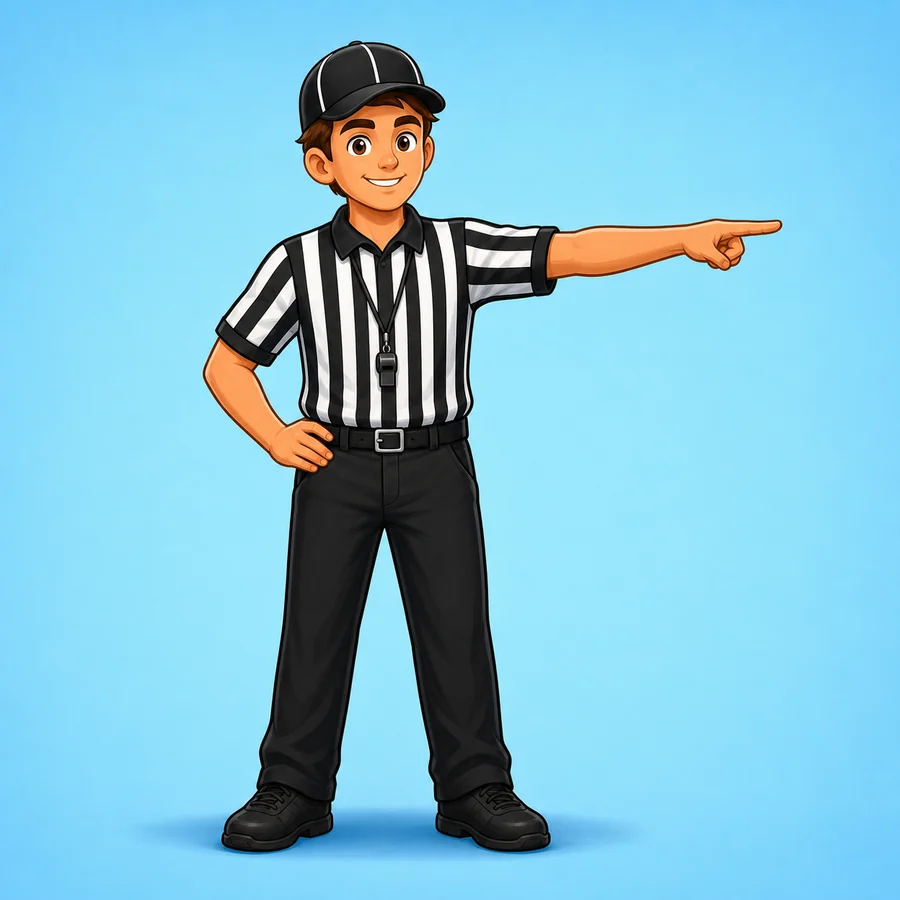
The action has left the wrestling area or must be restarted from the center.
When it happens: When wrestlers cross or approach the boundary in a way that requires a stop.
What parents should know: The restart position depends on control and the referee's judgment at the whistle.
Visual cue: Referee blows the whistle, points or gestures toward the boundary, and returns wrestlers to the center.
Stalling
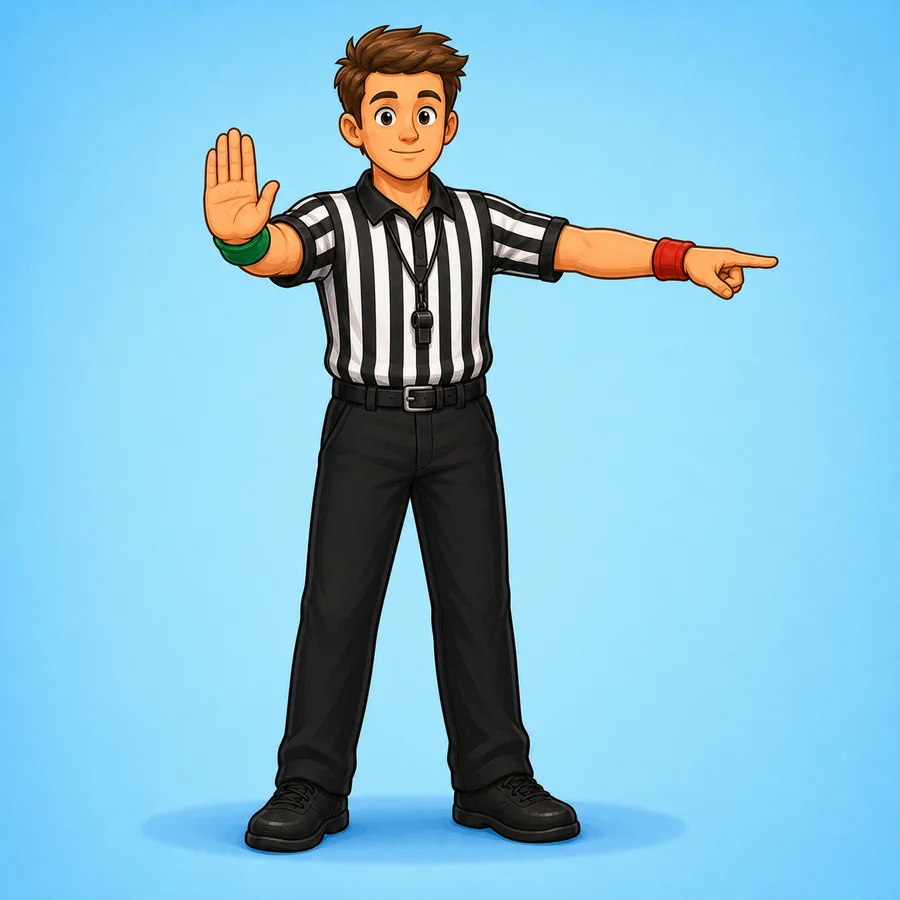
The referee warns or penalizes a wrestler for not making enough legal effort to wrestle or improve.
When it happens: When a wrestler backs away, holds on, avoids action, or fails to work as required by the rules.
What parents should know: Stalling is a judgment call and may build from warning to penalty points depending on the sequence.
Visual cue: Referee indicates stalling toward the wrestler or color being warned or penalized.
Caution Or False Start
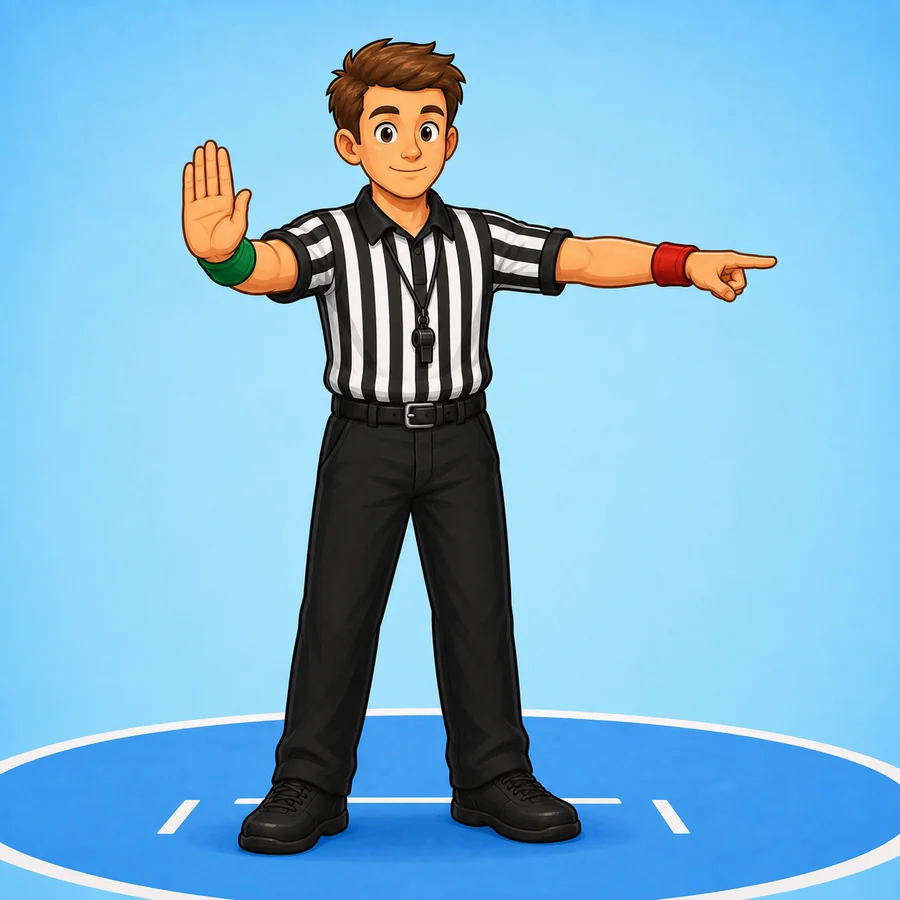
A wrestler moved early, set incorrectly, or violated the start procedure.
When it happens: Before or just after the whistle on referee's position or other starts.
What parents should know: Repeated cautions may become penalty points depending on the rule set.
Visual cue: Referee stops the start, identifies the wrestler, and resets the position before the next whistle.
Penalty Point
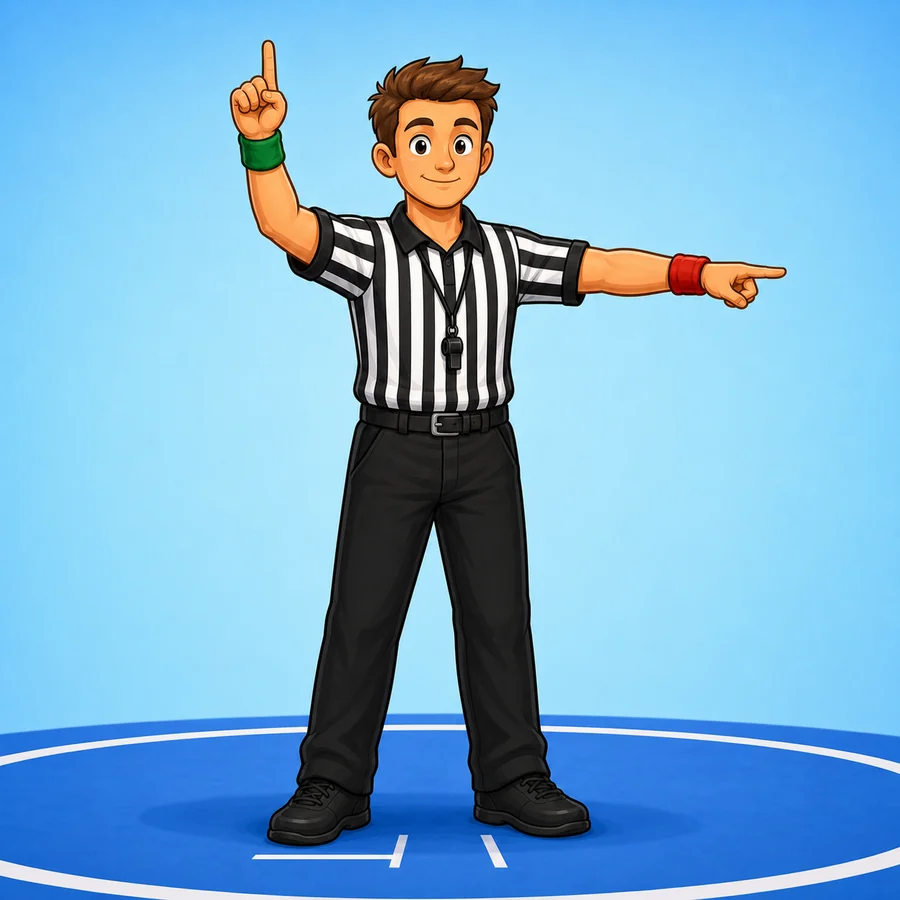
A point is awarded to the opponent after a violation or penalty sequence.
When it happens: After illegal holds, technical violations, repeated cautions, misconduct, or other rule violations.
What parents should know: Penalty details vary, so listen for the referee's explanation and watch which wrestler receives the point.
Visual cue: Referee signals the point to the non-offending wrestler's color and may explain the violation.
Neutral Restart
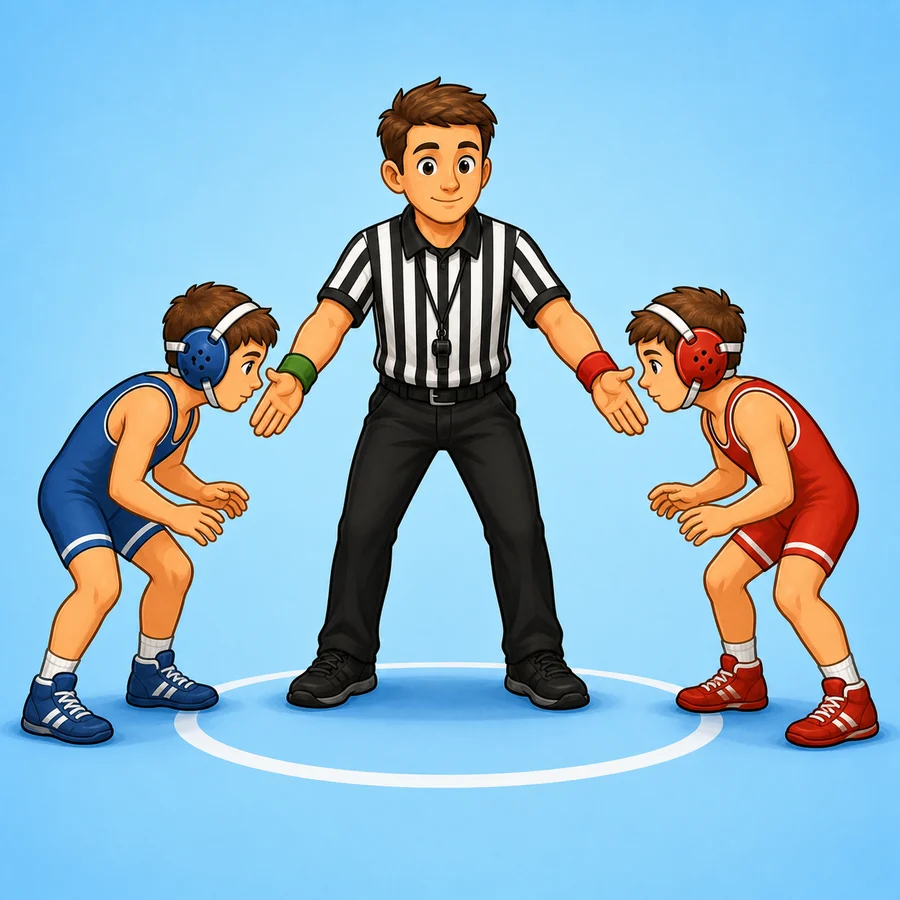
The wrestlers will restart from neutral rather than top-bottom.
When it happens: After an escape, out-of-bounds action without control, period start, or referee decision.
What parents should know: Neutral restarts bring both wrestlers back to their feet or neutral stance at the center.
Visual cue: Referee brings both wrestlers to the center facing each other and signals or whistles the restart.
Choice Or Defer
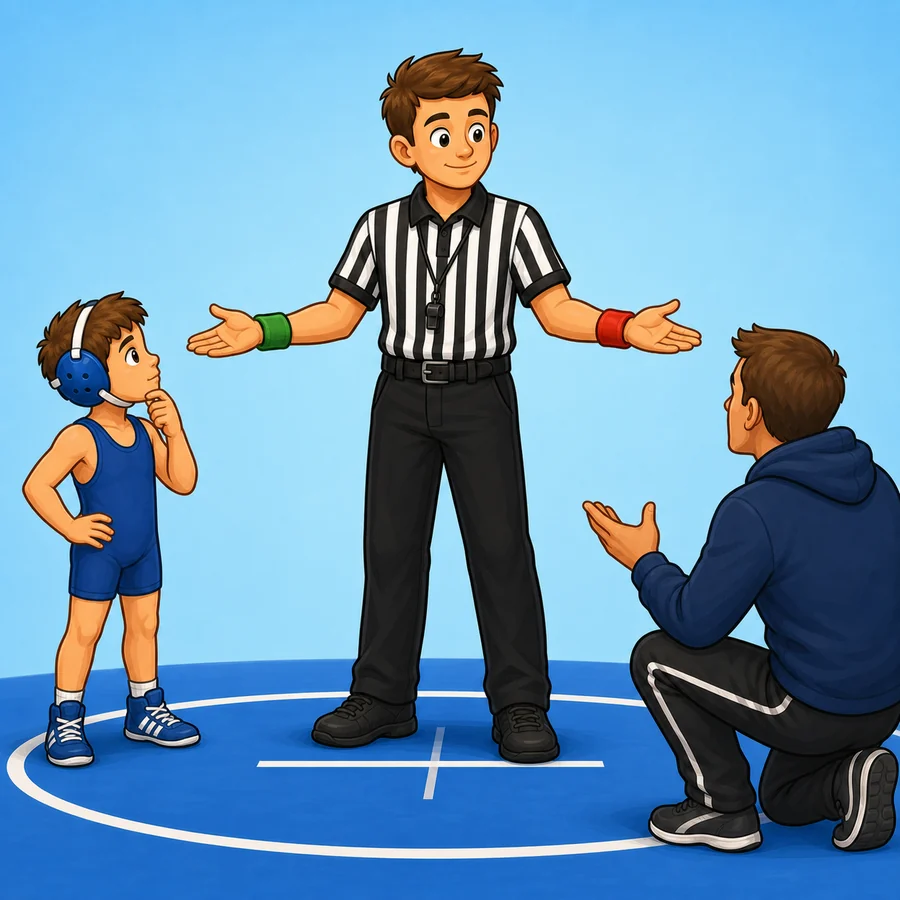
A wrestler or corner is choosing top, bottom, neutral, or deferring choice under the period or overtime rules.
When it happens: At the start of certain periods or special situations when choice is required.
What parents should know: Parents may see wrestlers point, coaches signal, or officials ask the table which color has choice.
Visual cue: Referee asks for the choice, confirms with the table, and sets the wrestlers in the selected starting position.