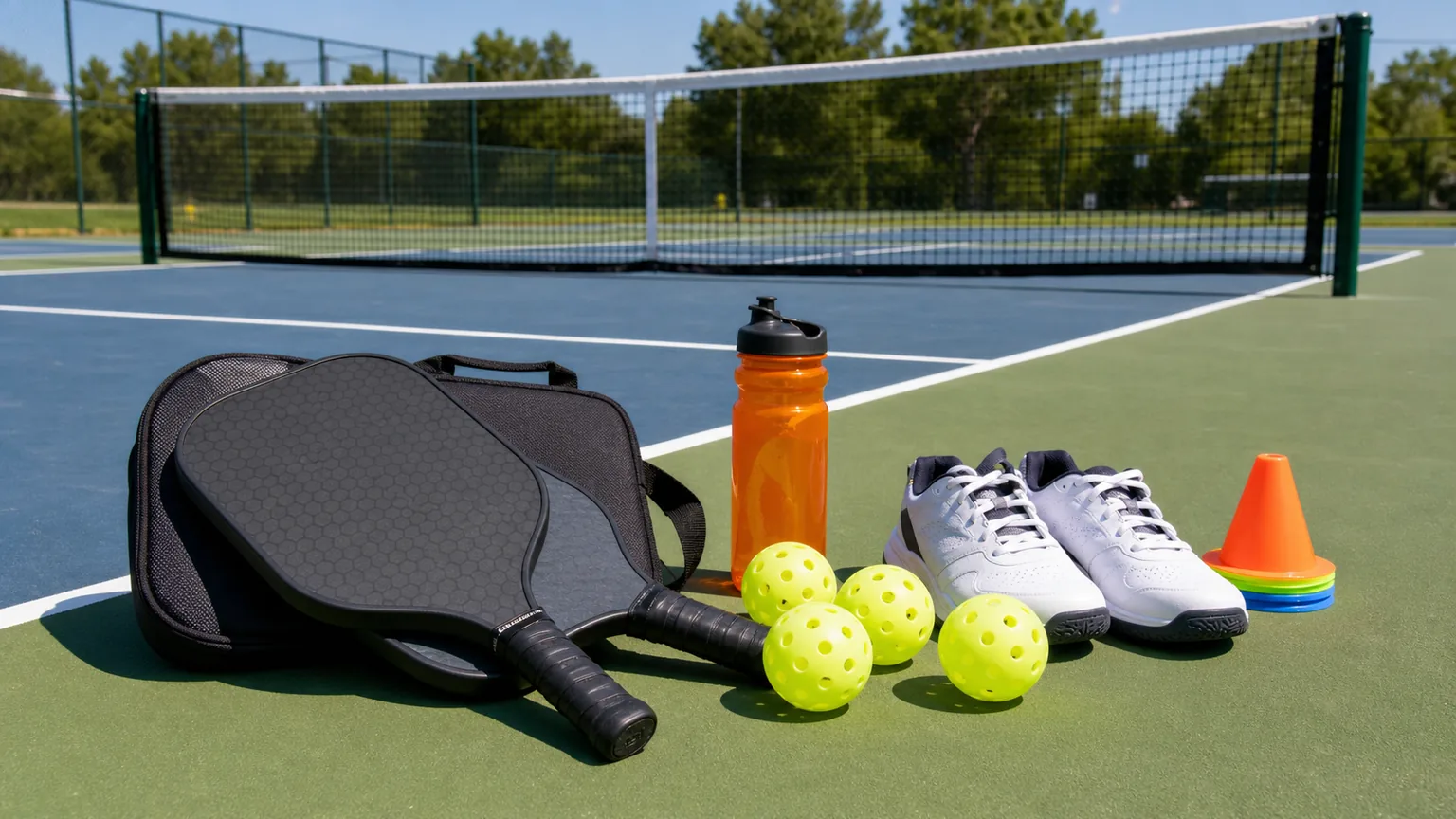
How a youth pickleball rally flows
Pickleball is a paddle sport where players serve underhand, let the ball bounce early in the rally, and try to place controlled shots over a low net.
The serve starts diagonally, the return must bounce, the third shot must also bounce before either side may volley, and rallies continue until a fault ends the point. Youth clinics may use shortened games, modified scoring, coach reminders, or mixed-age groups while players learn.
Parent note: Game flow
Scoring sounds strange at first
In many formats, only the serving side scores, and doubles players call three numbers: serving team's score, receiving team's score, and server number.
A doubles score such as 4-2-1 means the serving team has 4, the receiving team has 2, and the first server is serving. Some beginner programs simplify this with rally scoring or shorter games, so check the format before correcting a child from the sideline.
Parent note: Scoring
The kitchen changes net play
The non-volley zone, often called the kitchen, keeps players from smashing volleys while standing too close to the net.
Players may step into the kitchen to hit a ball that bounces, but they cannot volley while touching the kitchen or while their momentum carries them into it. This is one of the most common beginner confusions.
Parent note: Kitchen
Singles and doubles use different habits
Singles asks one player to cover the whole court. Doubles adds partner communication, middle coverage, and simple score-calling roles.
Most youth recreation play is doubles or rotating partner play because it keeps more players involved. Watch teamwork, communication, and controlled shots more than power.
Parent note: Singles and doubles
What parents should watch first
Start by watching serves, returns, the two-bounce rule, kitchen awareness, line calls, and whether players reset calmly after side outs.
Pickleball can look casual, but young players are learning court space, patience, and score memory at the same time. Helpful sideline support is quiet, positive, and not a running correction of every point.
Parent note: Parent viewing tip